
St Marys Church
Church of St Mary The Virgin
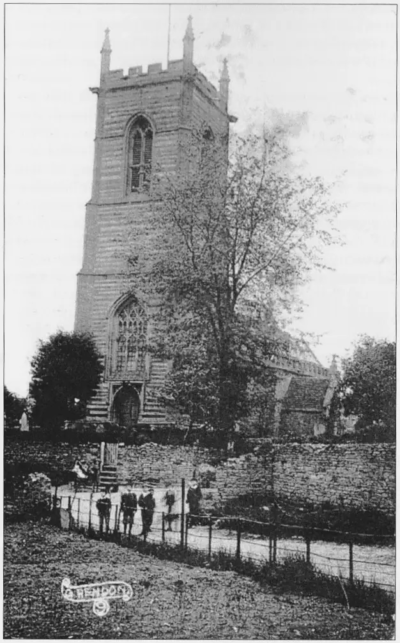
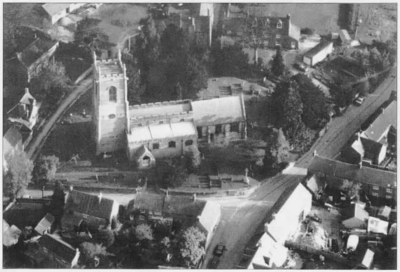
The earliest part of this fine old building dates from the late Norman period in the 12th century, but there may have been an earlier building. The site, protected by steep slopes on two sides, seems to have been chosen to provide a place of refuge for the villagers in the troubled times of the early Middle Ages when the area was ravaged by the Angles and the Saxons, and later on by the Danes.
St Marys Church Cont.
The Church Building
The building is constructed of limestone rubble with ironstone dressings. The two western pillars with rounded arches of the nave are all that remains of the original 12th century building as the east end seems to have been considerably reconstructed in the 13th century and aisles widened. The walls of the present south aisle and porch and eastern portion of the north aisle date from this period. The two eastern bays of the nave arcade with their pointed arches and the chancel were rebuilt between 1360 and 1380, the clerestory erected in the 15th century, as was the very fine four-story embattled pinnacle tower of branded grey limestone and brown ironstone in which hang five bells. The gargoyles on the corners at the top of the tower represent the four evangelists: a man’s head for Matthew, a lion for St. Mark, a bull for St. Luke and an eagle for St. John. The chancel was reroofed about 1848.
The Interior
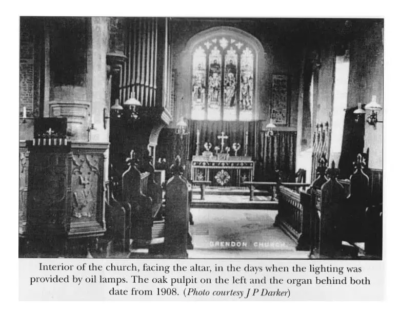
The east window depicts the Good Shepherd with the Virgin Mary and on either side stands St. Stephen, the first Christian, and St. Alban, the first British martyr. This window and the repaving of the sanctuary in black and white marble in 1914 were paid for by the Reverend Arthur Woodhouse, who was vicar from 1911 to 1920, in the memory of his three children. The floor of the rest of the church is flagged.
St Marys Church Cont.
The sanctuary has an Easter sepulchre on the north wall where, in the days before the Reformation, the reserved sacrament would have been kept from Good Friday until Easter Day. On the wall above, there is a plaque commemorating Thomas Willoughby, who died in 1682. He belonged to the family who owned Nether Grendon for many years. On the opposite wall, there is a stone sedilia,
medieval stone seats for the priest, deacon and subdeacon.
The chancel arch leading to the choir stalls is supported by two faces, modelled with great humour and originality by the medieval craftsman and most likely representing real people of their time. The face on the south side probably shows a scolding wife, and the one on the north side seems to be a jeering husband. Behind the oak pulpit, which was installed in 1908, there is a medieval squint, an opening in the wall through which members of the congregation on the north side of the church could see the elevation of the host.
As you enter the church, you see a large Victorian font on the left-hand side, and in the north aisle you will find an old framed clock which is of interest because it was not made by a clockmaker but by a local blacksmith in 1680 with stone weights and bell striker. Originally, it only chimed the hours, but in 1862 it was converted to drive the arms of the clock in the tower and the frame was cut to make room for the spindle and cogs. This old clock can still work, but it was taken out of service in 1960 because of the labor involved in winding it daily and because it had become very inaccurate. On the wall above the clock are three framed coats of arms of members of the Compton family who resided at Grendon Hall. These hatchments were emblems of mourning and would have been displayed for some months outside the house of the deceased person.
Further along the north wall is a book commemorating the members of the parish who died in the two
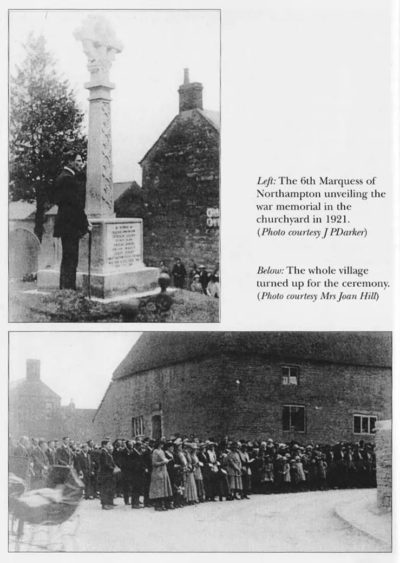
world wars. The six who died in the First World War were Reuben Underwood, Frederick Lambron, Sidney Black, Douglas Bowers, William Brealey and Joseph Parker. In the Second World War, only two men of the parish were killed, Vernon Crawley and Frederick Pendred.

St Marys Church Cont.
Their names are also engraved on the war memorial cross which stands in the corner of the churchyard by the roadside. On the south side wall, there is a fine 13th century piscina. That is a stone alcove with a basin in which the priest used to rinse his hands before and after the consecration of the bread and wine. On a floor slab in front of the pulpit are the 15th century figure brasses of an unnamed lady and her two husbands. Close by, there is a blue slab with a brass inscription to John Mortimer who died in 1446. There is an interesting anecdote relating to this gentleman, or perhaps his father.
St Marys Church Cont.
In 1413, John Mortimer of Grendon laid a complaint before King Henry V which was examined by a jury at Northampton Castle the Thursday before Christmas. Mortimer stated that while sitting in his mansion at Nether Grendon shaving his beard and clothed only in his doublet, he was attacked by William Trussell Junior of Eastern Maudit and his valets who were accompanied by other male factors of the counties of Chester and Stafford –
– in great multitude and armed in force led by the conspiracy, confederacy-“… and malice prepense of the aforesaid William Trussell and others, to the terror and perturbation of our lord, the king’s people, riding on horseback with force of arms and arrayed in warlike manner, viz, with coats of fence, jakkes, which is properly checkered armour (i.e. made of different pieces of material joined together), bows, arrows, swords, one-handed and two-handed, broke into the closes and mansion of the aforesaid John Mortimer against the peace of our lord, the king, and then and there insulted the said John Mortimer, beat and ill-treated him, some of the aforesaid malefactors shouting, ‘Slay, slay, slay’, and others of the aforesaid malefactors shouting, ‘Hoc, sinew, hamstring him, let us hastily depart.’
The unfortunate Mortimer was dragged off at dagger’s point and imprisoned in East Maudit for four hours, fearing for his life, until he was rescued by the combined descent of the constables of the adjacent villages. The kidnappers, awed by this formidable force, allowed Mortimer to go free. Unfortunately, the reasons for this fracas has not been recorded.
St Marys Church Cont.
St Mary not St James
In his otherwise excellent survey of Northamptonshire, Francis Whellan wrongly stated that the parish church of Grendon was dedicated to Saint James. And successive editions of the Kelly Directory and the ordinate survey maps call it the Church of Saint James to this day, although diocese records show that it was always been known as Saint Mary. There are two pieces of historical information that may have misled Whellan.
First, the convent of Saint James in Dunson, Northampton used to own land in the parish until the reformation. Second, the Reverend Robert Shelbourne, vicar from 1624 to 1655, left some nine acres of land to the parish in 1665, the rent of which was distributed among the poor. According to the historian Thomas Bridges, a wake used to be held on the Sunday after the feast of Saint James in his memory.
Charitable Bequests
The parish council now act as trustees for the land bequeathed to the poor of the parish by Reverend Robert Shelbourne. Another trust fund for the poor was set up in 1909 under the will of Richard Pipes Coles, who left £200 in trust to the vicar and church wardens, the income to be applied to the relief of the poor. In 1928, Major Anderson set up the Charles Markham Memorial with a donation of £125 under the same conditions. This fund now stands at 300 pounds. The church wardens act as trustees of these two funds.
The Bells of Saint Mary.
The third bell is the oldest of the bells in the tower, probably dating from the middle of the 15th century, and was made by John Sturdy of London. It bears the Latin legend, “Sit Nomen Domini Benedictum – the name of the Lord be praised.” This ancient bell is still sound and is listed for preservation by the Council for the Care of the Churches.
The medieval tenor bell used to carry the legend, “Sum rosa possetis mundi Maria vocata. When I am rung, I am called Maria, the rose of the world.” But in 1761, a new bell was cast by the old established foundry of Thomas Eyre of Kettering, which bears the words, “Cum sono, sinon vis venire nunquam ad preces cupisere, intactum silo percute docicano.
A beautiful tone rings through the unbroken silence. You want to come and pray with gladness, not by compulsion.” A tenor bell was cast for Earls Barton by Thomas Eyre at the same time, and there is a tradition that the bells were mixed up and Grendon received the bell meant for Earls Barton. It is a fine bell, and still has a good sound.
The treble, second and fourth bells were made by Hugh Watts of Leicester in 1618. In the early days after the Reformation, bell founders were carrier of offending religious
sentiments by placing ancient devotional phrases on the bells they cast which might smack of popishness.
They were too illiterate to think of new ones, so they inscribed a portion of the alphabet instead. In this way, they could ornament their bells with fine Gothic lettering without offending anyone. Like many other bells of the period, the treble and the second therefore have the legends ABCD – E F G H – I K L M and A B C D, E, F, G, H, I, K, L respectively.
The fourth bell solves the caster’s problem by having, in English, the phrase, “Praise the Lord.” The fittings for ringing the bells are over a hundred years old and in bad condition, so a full peal is no longer rung. Only the light treble bell is now chimed upon the swing to call the congregation to prayer.


St Marys Church Cont.
The Old Vicarage
The old vicarage, now known as The Grange, was built in 1850. The architect was Samuel Saunders Toulon, who was famous in his day for his neo-Gothic designs. It was built on an acre of ground donated by Lord Northampton, who also contributed £50.
towards the building costs.
Other contributions were £600 pounds from Trinity College and £400 from the Governors of the Bounty of Queen Anne, a fund set up in 1703 under the charter granted by Queen Anne from tithes and other income of the Church of England for the benefit of the lower clergy. And an additional £400 from the Reverend Daniel Brent, who was the vicar from 1835 to 1878.
There is a tradition that the house was built with stone from Odell Castle, which had been destroyed by fire. There are two crests on the building, one of the Marquess of Northampton, and the other of Trinity College.
The building was sold in 1952 after another smaller house had been built close by. In 1990, the parish of Grendon was combined with the parishes of Denton, Yardley Hastings and Castle Ashby, and the incumbent now lives in the vicarage at Yardley Hastings.